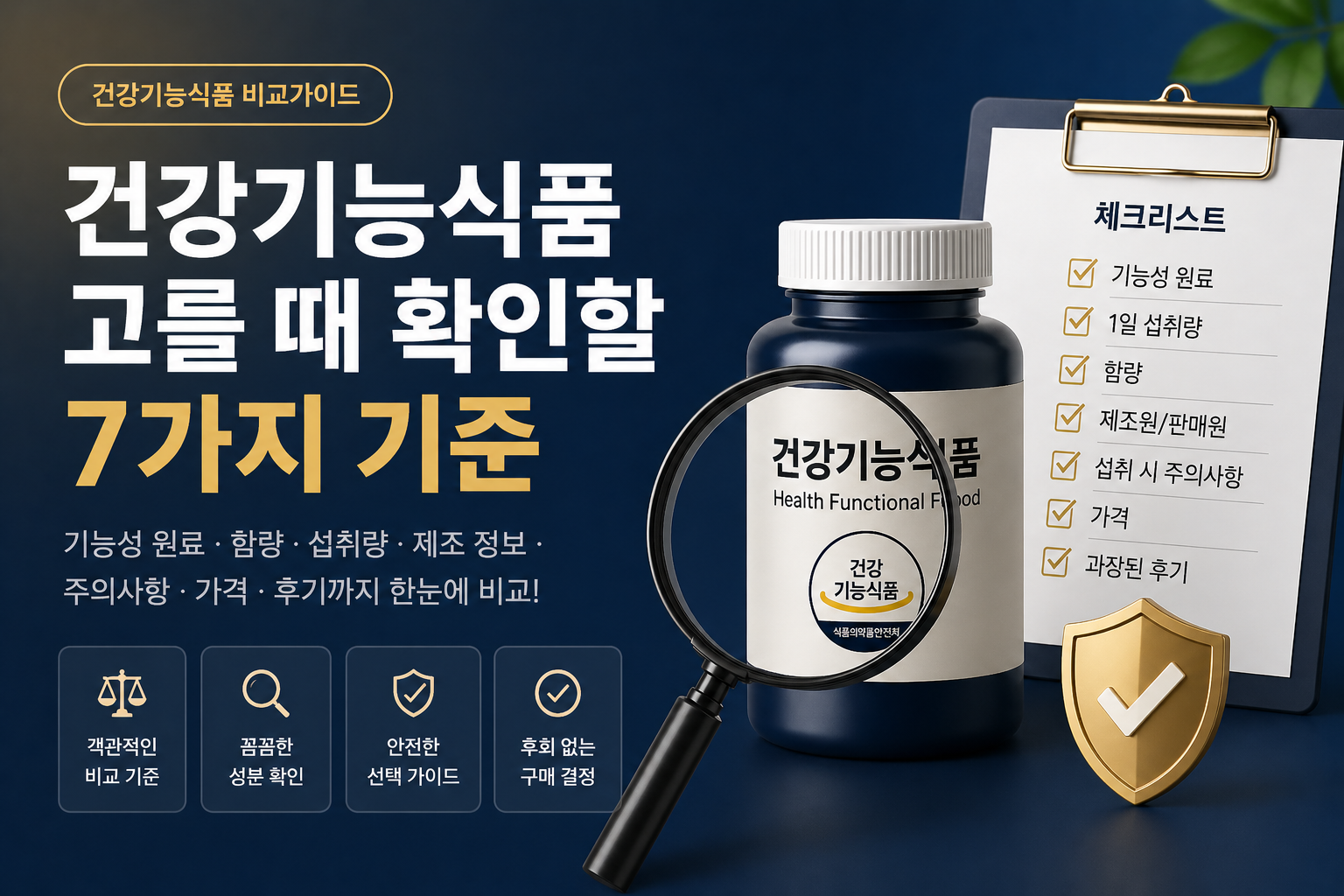
Ingredient and Intake Guide
How to Choose Astaxanthin: Dose, Function and Intake Guide
This guide uses official sources to explain the recognized function, daily intake, label checks, and cautions.
Key takeaways
Check the astaxanthin amount per daily serving, not the total capsule weight. Under the current Korean MFDS standard, the daily intake range is 4–12 mg as astaxanthin. A revised range of 6–12 mg takes effect on January 1, 2027. The recognized function for Haematococcus extract is limited to helping improve eye fatigue. A higher amount alone does not establish that one product is better.
Sources: MFDS Notice No. 2026-43, Partial Revision of Health Functional Food Standards, Food Safety Korea: Functional Ingredients for Eye Health
Recognized function of Astaxanthin
Food Safety Korea lists the recognized function of Haematococcus extract as helping improve eye fatigue. This wording defines the accepted functional scope of the ingredient. It does not mean that a specific product treats an eye disease or restores vision. Combination products may also contain lutein, zeaxanthin, vitamin A, or omega-3, each with separate recognized wording. Do not merge those claims into the function of astaxanthin. Even when the front label broadly says 'eye health,' read the nutrition and function panel to identify which ingredient supports each statement. Product comparisons should use the confirmed astaxanthin amount and official label information, not advertising language or subjective reviews.
Sources: Food Safety Korea: Functional Ingredients for Eye Health, MFDS Notice No. 2026-43, Partial Revision of Health Functional Food Standards
Daily intake and dosage basis
As of August 5, 2026, the current MFDS daily intake range for Haematococcus extract is 4–12 mg as astaxanthin. MFDS Notice No. 2026-43, issued on June 11, 2026, revises the range to 6–12 mg, but that specific provision takes effect on January 1, 2027. A currently marketed 4 mg product should therefore not be described as noncompliant solely because of the future range. The transition clause also allows products manufactured, processed, or imported under the previous rule to be sold until their expiration date. Read both the amount per serving and the number of servings per day to calculate the actual daily amount. The regulatory range is a product standard, not a personalized prescription.
Sources: MFDS Notice No. 2026-43, Partial Revision of Health Functional Food Standards
What to check when choosing a product
Astaxanthin per daily serving
Numbers such as 400 mg or 500 mg in a product name may refer to the total capsule or tablet weight. The active astaxanthin amount is listed separately in the nutrition and function panel. Compare products using milligrams of astaxanthin per daily serving, not the largest number on the front. A one-capsule product and a two-capsule product cannot be compared by per-capsule amount alone, so multiply the serving amount by daily frequency. In 2026, clearly separate the current 4–12 mg range from the 6–12 mg range scheduled for 2027.
Sources: MFDS Notice No. 2026-43, Partial Revision of Health Functional Food Standards
Recognized functional wording
The recognized function of astaxanthin-containing Haematococcus extract is limited to helping improve eye fatigue. Words such as 'eye health,' 'macular,' or 'antioxidant' may appear on the same product because of other ingredients. A formula containing lutein or vitamin A can carry several separate functional statements. Match each statement to its ingredient instead of attributing every function in a combination formula to astaxanthin. A product comparison should include only products whose ingredient-to-function relationship can be verified from official label information.
Sources: Food Safety Korea: Functional Ingredients for Eye Health
Daily directions and pack quantity
Two products at the same listed price can cover different periods when one requires one capsule a day and the other requires two. Divide the total unit count by the number of units taken each day to calculate supply days. The afternoon comparison adds mandatory shipping to the publicly available regular price and normalizes that total to 30 days. Member-only, coupon, and subscription prices are excluded from ranking because their conditions differ. A product is excluded when daily directions or pack quantity cannot be verified from both the product information and the retail listing.
Sources: MFDS Health Functional Food Information OpenAPI
The 2027 standard change
The change in Notice No. 2026-43 is not an immediate rule for astaxanthin intake. It takes effect on January 1, 2027. Products made under the previous rule may continue to be sold until expiration under the transition clause, so 4 mg products may remain on the market for a period after 2027 begins. Do not label a product illegal or noncompliant from that number alone without checking when it was manufactured and which rule applies. The automation engine must store the effective date with each regulatory threshold and select the rule applicable on the article's evidence-check date.
Sources: MFDS Notice No. 2026-43, Partial Revision of Health Functional Food Standards
| Criterion | What to check on the label |
|---|---|
| Astaxanthin per daily serving | Astaxanthin in mg and the number of daily servings |
| Recognized functional wording | The function specifically linked to Haematococcus extract |
| Daily directions and pack quantity | Servings per day, units per serving, and total units |
| The 2027 standard change | Manufacture or import timing, expiration date, and the applicable standard |
Cautions before taking it
The points below summarize the official sources linked in this data pack. They are general information and do not replace advice based on your health conditions or medicines.
- The current standard states that excessive intake may temporarily turn the skin yellow and may interfere with beta-carotene absorption. Follow the labeled directions and check for overlapping astaxanthin or beta-carotene when combining eye-health formulas.Sources: MFDS Notice No. 2026-43, Partial Revision of Health Functional Food Standards
- From January 1, 2027, the revised standard adds that children, pregnant people, and breastfeeding people should avoid intake, and that use should stop with professional consultation if an adverse event occurs. This must be labeled as a future effective requirement rather than merged into the current 2026 standard.Sources: MFDS Notice No. 2026-43, Partial Revision of Health Functional Food Standards
Frequently asked questions
Is a higher astaxanthin amount always better?
No. The MFDS intake range is a product standard, not a ranking in which a larger number automatically means better. Comparisons should group similar daily amounts first and then evaluate verified label information, daily directions, and 30-day cost without rewarding a higher dose by itself.
Sources: MFDS Notice No. 2026-43, Partial Revision of Health Functional Food Standards
Does 400 mg or 500 mg in the product name mean astaxanthin amount?
Not necessarily. That number may be the total capsule or tablet weight. Find the separate astaxanthin amount in the nutrition and function panel, then apply serving size and daily frequency to calculate the daily total.
Will every 4 mg product become unsellable on January 1, 2027?
No blanket conclusion is appropriate. The revised range takes effect on January 1, 2027, while products manufactured, processed, or imported under the prior rule may be sold until expiration under the transition clause. The applicable rule depends on timing and product history.
Sources: MFDS Notice No. 2026-43, Partial Revision of Health Functional Food Standards
How should a lutein and astaxanthin combination be compared?
Check the daily amount and recognized function of each ingredient separately. Do not transfer lutein's macular-pigment wording to astaxanthin or present astaxanthin's eye-fatigue wording as a treatment effect of the entire formula. A comparison table should keep the amounts in separate fields.
Sources: Food Safety Korea: Functional Ingredients for Eye Health
Can this standard determine my personal astaxanthin dose?
No. These numbers describe the daily intake standard applied to health functional food labeling and manufacture in Korea. They do not account for an individual's health conditions, pregnancy or breastfeeding, medicines, or other supplements.
Sources: MFDS Notice No. 2026-43, Partial Revision of Health Functional Food Standards
Sources
Related guides
Editorial information
Author: Korea Supplement Comparison Guide Editorial Team
This article explains how to read official label information. It is not treatment or prevention advice.
Evidence checked: 2026-08-05
Revision history
- 2026-08-05: First edition separating the current standard from the 2027 changes in MFDS Notice No. 2026-43