Ingredient and Intake Guide
2026 Vitamin C Guide: Daily Intake and Safety Checks
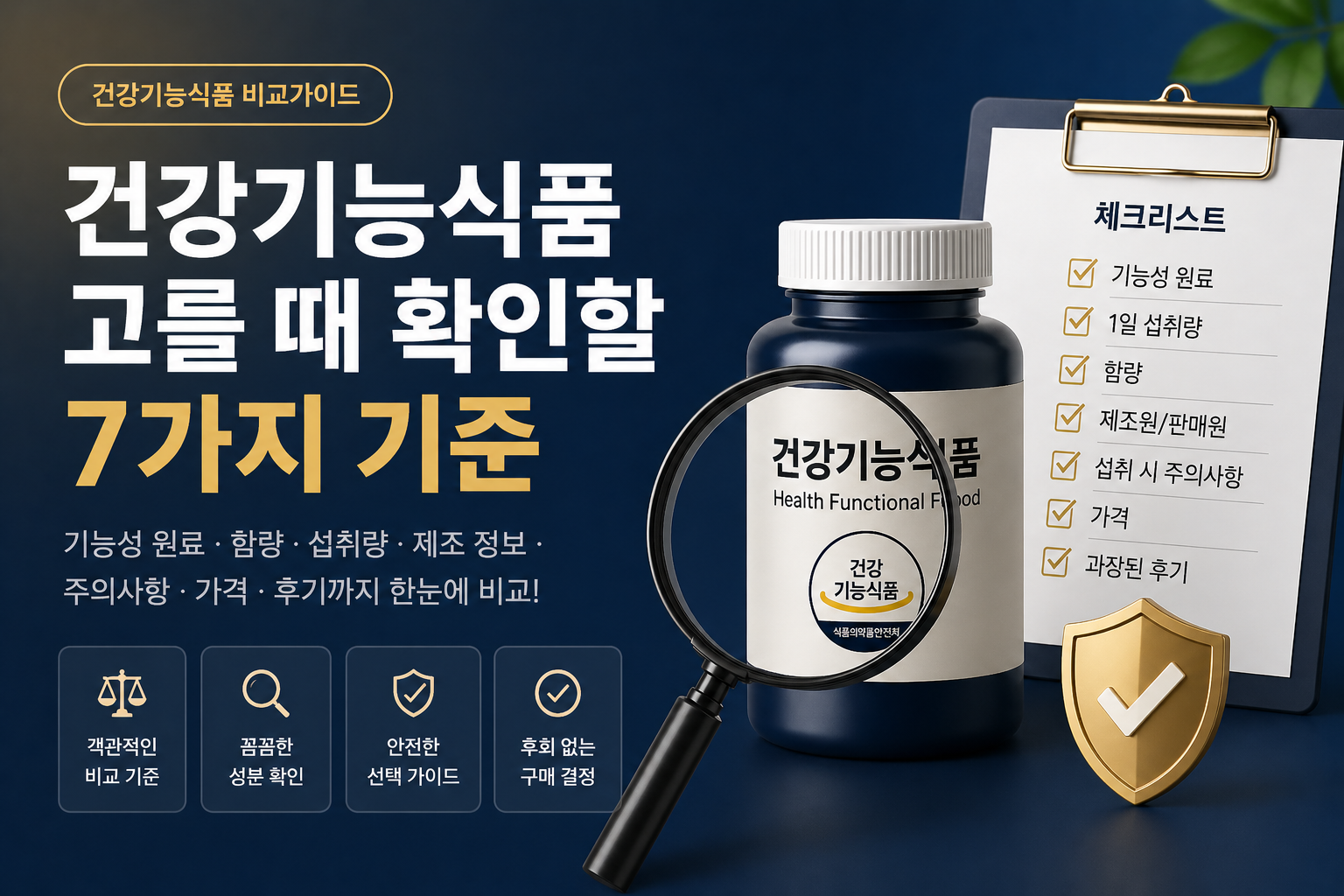
Choose vitamin C supplements by the officially filed information rather than front-label claims. The filed functions are three: connective tissue formation, iron absorption, and antioxidant protection, and the verified filed products listed 500mg per unit with daily servings split between one and two. Below, we walk through how to read the amount on the label and the cautions in order.
Key takeaways
When choosing a Vitamin C product, check the MFDS registration and the nutrition and function panel before front-label claims. The automated verification found 5 retail products that could be matched to one MFDS registration. Their listed amounts were Vitamin C 500 mg. The forms were capsule, and the directions ranged across 1 per day, 2 per day. These figures describe the verified labels; they do not create a new recommended dose. Read the registration number, daily directions, pack quantity, and cautions together instead of judging a product by dose alone.
Sources: MFDS Health Functional Food Product Registration OpenAPI, Food Safety Korea Health Functional Food Product Search
Recognized function of Vitamin C
MFDS health functional food records describe the recognized function as follows: Vitamin C is needed for the formation and maintenance of connective tissue, supports iron absorption, and helps protect cells from free radicals through antioxidant activity. This wording describes a recognized function of a health functional food; it is not a claim to treat or prevent disease. A combination product may list functions for other vitamins or minerals, so match each statement to the ingredient that supports it. The nutrition and function panel on the back label lists the ingredient next to each statement, so you can tell there whether the effect a page advertises actually belongs to vitamin C or to another blended ingredient. That panel, not the sales copy, is the reference.
Sources: MFDS filing data
Daily intake and dosage basis
The verified labels listed Vitamin C 500 mg, with directions spanning 1 per day, 2 per day. Products containing the same ingredient can use different forms, blends, and unit sizes, so their directions are not automatically interchangeable. Dividing the total unit count by the daily unit count gives the approximate supply period. That calculation is used to normalize price to 30 days; it is not a reason to increase the dose. A candidate is excluded when the retail label and MFDS directions conflict, and the directions on the verified product label should be followed.
Sources: MFDS filing data, Food Safety Korea
What to check when choosing a product
Registration number and product name
A similar retail name is not enough to prove identity. Match the product name, functional ingredient amounts, and daily unit count to the MFDS record, and use the product only when one registration remains. Brands sometimes sell a reformulated product under a nearly identical name, so matching the registration number, not the name or the packaging, is what confirms that the version on sale matches the filed record.
Sources: MFDS filing data, Food Safety Korea
Amount per daily serving
The verified labels listed Vitamin C 500 mg. A per-unit amount can differ from the full daily serving, so multiply by the daily unit count and compare consistent units. A higher number alone does not prove a better effect. Mixing up the per-unit figure and the per-daily-serving figure can make even two 500mg products look different, so anchor on the amount per daily serving printed in the nutrition and function panel and check which basis a sales page is quoting first.
Sources: MFDS filing data
Directions and pack quantity
The verified forms were capsule, with directions of 1 per day, 2 per day. A pack price can hide quantity differences, so divide the total unit count by daily units before comparing how long each pack lasts.
Sources: MFDS filing data, Food Safety Korea
Why the same 500mg lasts a different number of days
Put the two verified patterns side by side and the difference is clear. With an identical printed amount of 500mg, a one-per-day product delivers 500mg a day while a two-per-day product delivers 1,000mg. If a pack holds 60 units, the first lasts 60 days and the second only 30, so the same pack size covers half the time. That is why price should be compared per day, by dividing the total unit count by the daily units, rather than per pack. This comparison only works within the directions printed on the label; taking fewer units than directed to stretch a pack is not something we suggest. The same method also applies when the amounts differ between products: convert both to daily intake and daily cost first, then compare.
Sources: MFDS filing data
How to verify the registration yourself
However detailed a sales page looks, the filed record is the final check. Search the product or company name in the Food Safety Korea health functional food lookup and the filed label details appear as registered; if the functional statements, daily directions, or cautions differ from the sales page, it is safer to drop that product from your shortlist. The same goes for products whose registration number cannot be found, or whose registered name does not match the retail name. The lookup is free, requires no sign-up, and takes only a few minutes.
Sources: Food Safety Korea
Cautions
Products with the same main ingredient can have different cautions because of their other ingredients. Read each product's statements about allergies, pregnancy or nursing, health conditions, and medicines, and stop use if an adverse event occurs.
Sources: MFDS filing data
| Criterion | What to check on the label |
|---|---|
| Registration number and product name | Match the retail product to one MFDS registration |
| Amount per daily serving | Compare the full daily serving, not one unit |
| Directions and pack quantity | Check daily units and total pack count |
| Cautions | Compare medicines and conditions with official cautions |
Cautions before taking it
The points below summarize the official sources linked in this data pack. They are general information and do not replace advice based on your health conditions or medicines. If the same wording repeats in the lists below, it is a caution the verified products state in common; read the list for the product you chose, starting with the overlapping items.
- If you have an unusual constitution or allergies, check the ingredients before taking this product. Check the expiration date and follow the stated amount and directions. Children should take this product under adult supervision because it may become lodged in the throat. Stop taking it and consult a professional if an adverse event occurs. Do not exceed the stated intake amount. Consult a professional before use if you have kidney disease.Sources: MFDS filing data
- If you have a medical condition or allergies, or if you are pregnant, check the ingredients because an individual hypersensitivity reaction may occur. Check the expiration date and follow the stated amount and directions. Stop taking it and consult a professional if an adverse event occurs. Do not exceed the stated intake amount. Consult a professional before use if you have kidney disease.Sources: MFDS filing data
Frequently asked questions
Is more Vitamin C always better?
No. A higher label amount alone does not prove a better effect. Read the daily directions, recognized function, and cautions together.
Sources: MFDS filing data, Food Safety Korea
Why do products list different amounts?
Forms, blends, and daily unit counts differ. The verified labels listed Vitamin C 500 mg, so compare the complete daily serving.
Sources: MFDS filing data, Food Safety Korea
How do I calculate the supply period?
Divide the total unit count by the daily unit count. A 60-tablet pack taken two per day lasts 30 days. Exclude a listing when pack count or directions cannot be verified.
Sources: MFDS filing data, Food Safety Korea
Can I take it with medicines?
Other ingredients and official cautions differ by product. If you take medicines, check the product label and MFDS cautions and consult a healthcare professional.
Sources: MFDS filing data, Food Safety Korea
What is the right way to compare prices?
Add mandatory shipping to the public regular price, divide by the verified supply days, and normalize to 30 days. Exclude member, coupon, and subscription prices because eligibility differs.
Sources: MFDS filing data, Food Safety Korea
Sources
Related guides
A verified product comparison will be linked after publication.
Editorial information
Author: Korea Supplement Comparison Guide Editorial Team
This article explains how to read official label information. It is not treatment or prevention advice.
Evidence checked: 2026-08-06
Revision history
- 2026-08-06: First published